Friday, March 6, 2020

Exploring the Book of Kells

 At the beginning of the 20th century, one of the key books about the Book of Kells was the study by Sir Edward Sullivan (1920) which contained page prints of excellent quality for the time along with Sullivan's exuberant commentary.  This book is now in the public domain and is available to browse through or download at the Internet Archives:


Many people have contemplated the illuminations of the Book of Kells through Sullivan's book and found inspiration there.  James Joyce carried Sullivan's book all over Europe with him:


FutureLearn and Trinity College, Dublin provides an excellent page on 


Nowadays you can look at every page of the Book of Kells online and zoom in on all the details.  This amazing digital version is provided by the Manuscripts & Archives Research Library, Trinity College Dublin:


In studying the Book of Kells it is customary, as with most manuscripts, to refer to each physical page as a leaf or folio, and to distinguish the recto (or front) and the verso (or back) of the sheet.  So in looking at the online Book of Kells you have a number for each folio or physical page followed by an r or a v for recto or verso.

In our previous Kells post The Beautiful and Mysterious Book of Kells, we looked at the 67th page, called the Chi Rho Page.   For the online version, we would find this page called Folio 34r, meaning the recto or front of the 34th sheet:


We can zoom in on the cats and mice and save a fine quality image:


  If we zoom in on the Celtic interweave pattern near the top right of the page, we see that it has the head of a bird:


So Trinity College, Dublin has generously provided us with a fine tool for exploring the Book of Kells and making our own collection of images for personal viewing, both full page and zoomed in to intricate detail.

Here is an link to the set of books I found particularly helpful in my own exploration of the Book of Kells:

Ten Great Books about the Book of Kells


And here is a link to the...


Wednesday, March 4, 2020

The Beautiful and Mysterious Book of Kells


The Book of Kells is a medieval illuminated manuscript of the four gospels (primarily in the Latin or Vulgate translation of St Jerome) with many intricate, mysterious and mesmerizing illustrations such as the above 67th page, called the Chi Rho Page.  The quote below from the Topography of Ireland by Gerald of Wales (1185 AD) is believed by many to describe the Book of Kells and tells of the rewards of close examination:  


One of the mysteries of the Chi Rho page is the whimsical illustration of cats and mice near the bottom left:


It appears to show two mice nibbling on a communion wafer while two cats stand with paws on their tails and with two more mice on their backs!

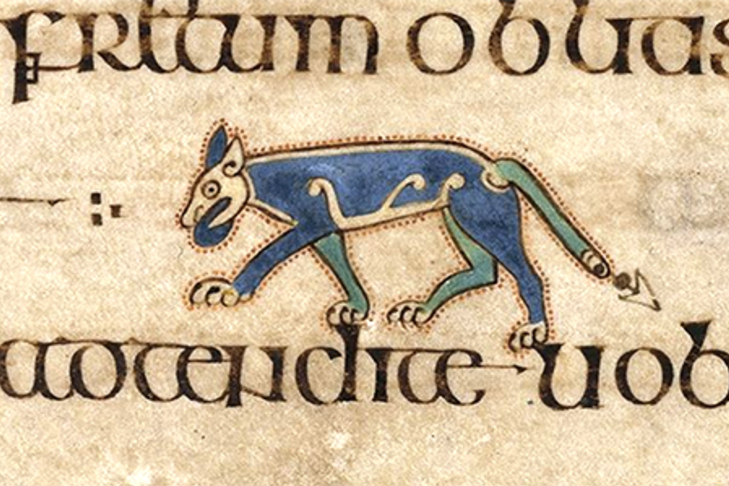
The Book of Kells is filled with cats, mice and a wild variety of other creatures.  Here are examples of many of the creatures from the Book of Kells:

Animalia and Pages Ornaments from the Book of Kells


FutureLearn provides an entertaining and informative page on 


Geoff Swimer provides two short but excellent videos on...

Animals in The Book of Kells

 The animals in the Book of Kells are beautiful and varied. A brief introduction to the some of the different animals is followed by a look at the animals appearing in three of the full page illuminations. The 9th Century Columban monks of Iona illuminated the Gospels with Lions, peacocks, fish, snakes, wolves, cats, horses, Eagles and many more.


Cats and Peacocks in The Book of Kells


A more in depth video on the Book of Kells:


Monday, April 29, 2019

Sunday, January 13, 2019

The Art of Art Restoration and Conservation


Art History News has a fascinating archive of art restoration news both in print and video:


Art Restoration truly became a science in the 20th century.  
Professor Joyce Hill Stoner from the University of Delaware writes about the...

Changing Approaches in Art Conservation: 1925 to the Present


Modern Chemistry plays an important part in restoration and conservation.  See how nanoparticles, laser cleaning, and glue-eating bacteria restore valuable frescoes and paintings:

Modern Chemistry Techniques Save Ancient Art


The National Gallery of Canada has a team of a dozen restorers and conservators.  Watch them at work:

Restoration and Conservation at the National Gallery of Canada


A fascinating profile of art conservator Suzanne Siano:

One Painting at a Time


Baumgartner Restoration has some amazing videos about the art restoration process:


The amazing skills of art restoration are particularly appreciated where you see restorations badly done:


The Carnegie Museum of Art:  Go behind the scenes with chief conservator Ellen Baxter as she discusses the restoration process of a portrait of Isabella de' Medici:


 National Portrait Gallery, Smithsonian Institution:  After 18 months of careful conservation and analysis, Gilbert Stuart’s “Lansdowne” portrait of George Washington is back on view in the newly refurbished “America’s Presidents” gallery. 

Conservation of the “Lansdowne” Portrait of George Washington:

The Cathedral of Valencia and the restoration of the paintings there by Dr. Maria Gomez:


Not only paintings, but also drawings are restored. 
Watch a video showing the MET conservation of a Michelangelo drawing on loan from Christ Church Picture Gallery, Oxford:

 Art restoration sometimes means entire rooms!  The Damascus Room (1707) served as the reception area within a Syrian home of the Ottoman period. Extensive conservation and historical research were carried out by the Metropolitan Museum in preparation for the opening of the new galleries.

Conserving the Damascus Room at The Metropolitan Museum of Art:

Some restorations are mammoth and meticulous projects that go on for years, such as the restoration of the Sistine Chapel:


Monday, March 26, 2018

Index of Past Posts


Serpents of the Beatitudes: The Book of Kells Text, Part 2

Exploring the Book of Kells Text

Index to the Most Famous Pages of the Book of Kells

Artists of the Book of Kells

Exploring the Book of Kells

The Beautiful and Mysterious Book of Kells

The Great Cathedrals are Architectural Wonders

Agate Sealstone Rewrites the History of Ancient Art

The Art of Art Restoration and Conservation

Art Gallery of Ontario

Atlas at the Louvre, Paris

Elim Museum of Chinese Ancient Porcelain Art

Famous Artists Complete Works

First Dogs in Art?

Google Arts and Culture

Hermitage Museum in Saint Petersburg, Russia

Imaginary Prisons of Piranesi

Mathematics of Islamic Tiling Patterns

Met Museum Makes 375,000 Images Free

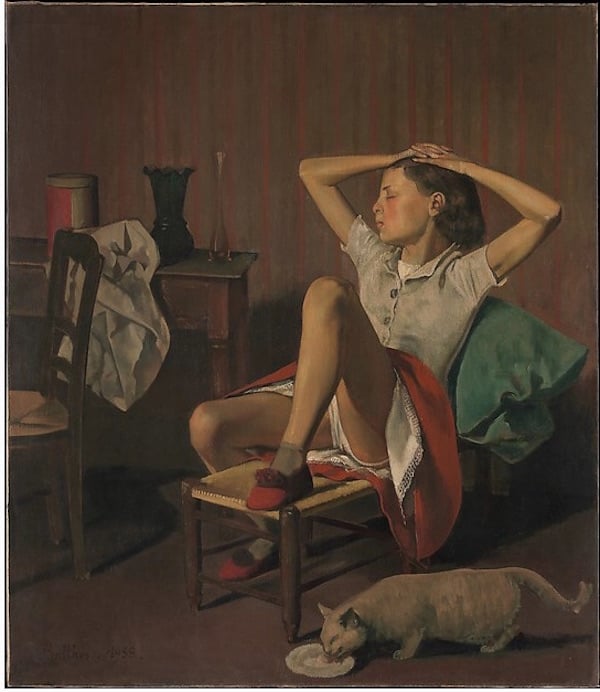
Met Says 'Suggestive' Balthus Painting Will Stay

Museum of Modern Art Online

National Gallery in London

National Gallery of Canada Online

Neanderthal Art the Oldest Ever Found

Prado Museum in Madrid

Rijksmuseum's ever-growing collection of over 300,000 Images 

Singing and the Silence: Birds in Contemporary Art 

Those Garish Greeks and Romans

Wander through the Machu Picchu Museum in Cusco, Peru

Wander Through the Royal Museum of Fine Arts in Antwerp 


Met Says 'Suggestive' Balthus Painting Will Stay


ArtNet Article:  

The Met Says ‘Suggestive’ Balthus Painting Will Stay After Petition for Its Removal Is Signed by Thousands...


Thursday, February 22, 2018

Neanderthal Art the Oldest Ever Found

The more we learn about Neanderthals, the more like us they seem and the less like the sub-human knuckle draggers of popular opinion...

Article From National Geographic: 

In a cave in Spain, scientists found this ladder shape made of red horizontal and vertical lines. The artwork dates to more than 64,000 years ago, suggesting it was created by Neanderthals.

The original research article:

This panel features the La Trampa pictorial group (21). (Inset) Crust sampled and analyzed for a minimum age (64.8 ka), which constrains the age of the red line. See (20) for details.

Scientific American:


Neanderthal Origin of Iberian Cave Art


Did Humans Make These Ancient Cave Paintings? | National Geographic


"Or was it Neanderthals? This question and others tantalize researchers investigating early paintings in some of Europe's caves. The paintings date back to a time when Neanderthals and early modern humans lived side by side."


CARTA: Evolutionary Origins of Art and Aesthetics: Neanderthal Art - Jean-Jacques Hublin

 
Renowned anthropologist Jean-Jacques Hublin explores the notion of art production by early human ancestors. Series: CARTA - Center for Academic Research and Training in Anthropogeny [Science] [Show ID: 16434]